ECONOMIC IMPACT
Sericulture in India
We traveled anlong the silk production chain to get to know the different stages of this important economic branch and the people working in it.
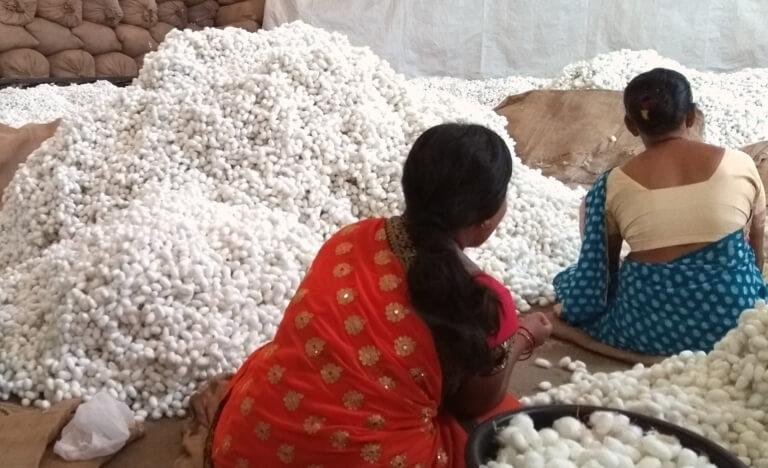
Silk production has a long tradition in India. Today, around 10 million people are employed in this branch of the economy.
Nevertheless, we are repeatedly asked whether India is a reliable partner country for business relationships. We have covered many kilometres over bumpy, dusty roads to visit smallholders, markets for silk cocoons, processors and research institutes in different regions of India.

In doing so, we have been able to get to know the entire value chain of silk production: from breeding and rearing to processing. We have learned what differences there are when it comes to producing and processing silk.
We know our partners and suppliers personally. We chose them because, like us, they value pesticide-free cultivation, fair wages and optimal product quality - and because we share the vision of making the vauable raw material of silkworm pupae utilisable for you.
THE SILK MOTH
Hard-working quick-change artist
Did you know that the silkworm's cocoon consists of a continuous silk thread around 1000 metres long?
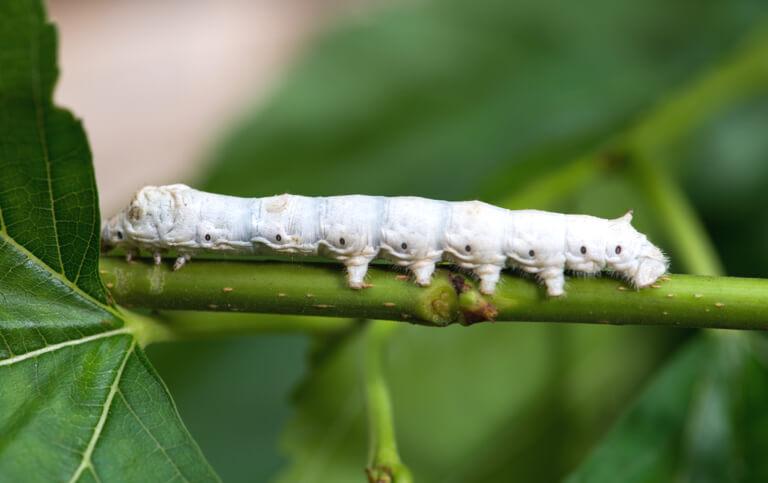
The silkworm (Latin: Bombyx mori) was domesticated in China for silk production around 5000 years ago. After hatching from a small round egg, it goes through a complete metamorphosis: from caterpillar to pupa in the silk cocoon to moth. The caterpillar feeds exclusively on the leaves of the mulberry tree.
For the silk farmers, breeding silkworms is a greatly valued job. In contrast to field crops, they can regularly and predictably 'harvest' silk cocoons. The silkworms are cared for with appropriate painstakingness. Several times a day, young, fresh leaves are picked from the surrounding mulberry plantations and brought to the meticulousy clean silkworm huts. It's shoes off before entering! The animals develop here, protected from sun, rain and predators, from hatching to pupation.
DRYING
Gentle and hygienic
Gentle and hygienic drying all year round is crucial for ensuring the optimal quality of our products.
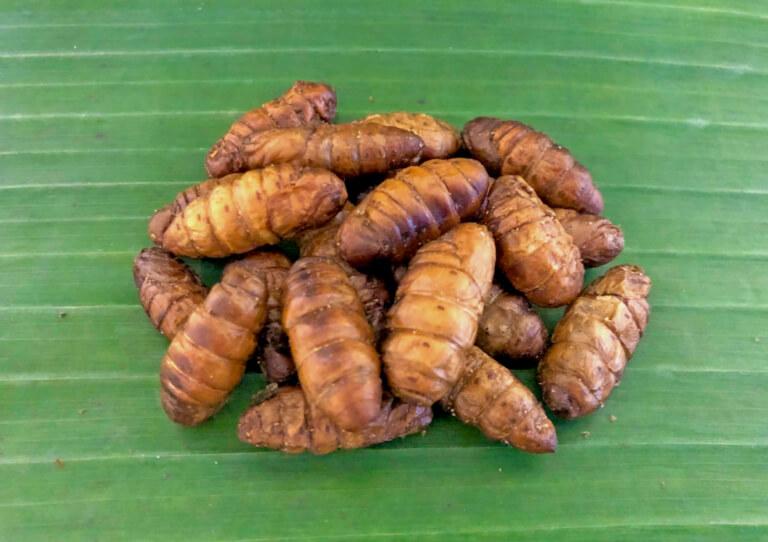
Our silkworm pupae are dried and sanitised directly after reeling of the silk cocoon using a gentle machine-drying process. In contrast to traditional sun drying, which often takes days, this enables quick and hygienic drying. This way, we can achieve maximum freshness and optimal nutrient quaity al year round.
QUALITY MANAGEMENT
We keep an eye on the entire value chain
We supervise our products from the mulberry tree through the production process, right up to delivery to you.

Through our quality management system, we not only monitor the direct processing of our products, but also keep a close eye on the entire value chain, from the mulberry tree to the processing of the silk. By maintaining close contact with smallholders, traders and processors, we can ensure that our high standards are consistently met.
Each batch is tested again by accredited laboratories upon completion to ensure impeccable quality and the absence of harmful substances.
Sustainability
A low CO2 footprint as a strong argument for your sustainability strategy
In collaboration with ClimatePartner, PROMBYX has transparently calculated the CO2 footprint of silkworm protein – to promote greater sustainability and build trust in your supply chain.

As a manufacturer of sustainable animal feed, the carbon footprint of your products plays a key role – both for your environmental performance and for your customers. In collaboration with ClimatePartner, PROMBYX has calculated the Product Carbon Footprint (PCF) for silkworm protein in accordance with the standards of the Greenhouse Gas Protocol. The result: just 1.67 kg of CO2 per kilogram of silkworm meal – roughly equivalent to the emissions from an 8-kilometre car journey.
This comparatively low figure makes silkworm protein an environmentally friendly alternative in feed production – and a major selling point for your sustainability communications.